“We have to have this!” our client exclaimed as she put a picture of Google’s office in front of us. The picture showed Google’s famous multi floor slide. “Our people will use this! We’re an adventurous bunch! And no separation either! We want everyone sitting next to each other with no panels so we can collaborate, just like Google!”
You can probably guess how this turned out. After a failed attempt to describe how organizational cultures differ between companies and that what works at Google might not work at their company, the client moved forward anyway. After construction delays caused by cutting through 3 floors of their office building for the slide and what must have been a an enormous expense, they moved in. Within a month, a handful of people used the slide – and a few got hurt. Within 3 months it was closed for use. After that, it was mostly used to deliver paperwork and mail from one floor to the other. Worse yet, the open plan/no division concept turned out to be disastrous and the project team was called in to renovate the entire space a year later.
So, what went wrong? Are slides a bad idea? Is open plan evil? Shouldn’t everyone aspire to having “the coolest office space”?

Organizational culture is defined as the attitudes, beliefs, and artifacts that make up the personality of your company. Author Rex Miller cleverly defines it as the “attitudes that get the job done when the boss isn’t watching”. Understanding your culture is the first step in building a truly engaging and productive space.
The Ross School of Business at University of Michigan uses a tool called ‘The Competing Values Framework” to help companies diagnose and identify their current culture and, more importantly, what they want that culture to become. It does this by defining the 4 types of company cultures that exist in business and how, while there is usually a predominant culture, all 4 of these “personality’s” can exist at one company – hence the name “Competing Values” But does all this really matter? Isn’t this just a bunch of corporate buzzword nonsense?

4 types of company cultures:
- Create Culture – This is the sexy one. The one that gets all the press. These are the companies that are visionary and want to create “the next big thing”. They are willing to spend money and talent and fail often to achieve it. Because of that search for the “breakthrough” idea, they can also sometimes neglect the details of manufacturing or the emotional roller coaster their employees and customers feel in this type of environment. Apple, Tesla and Google are the most famous examples of these types of visionary companies.
- Compete Culture – These are the drivers who want to be first. They are all about speed to market, improving client experience to gain market share and winning quickly. They don’t do R&D – they buy the companies who have developed what they need. Because of this mentality, they can sometimes miss the big picture. They can be so focused on winning they can neglect the direction the market is taking. Microsoft, Uber, Domino’s and Blackberry are examples of Compete cultures.
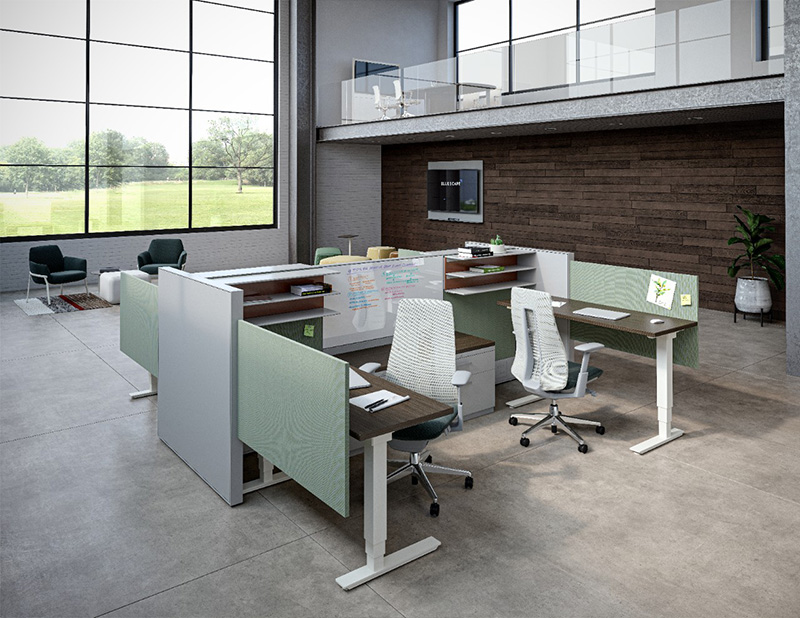
- Control Culture – Are you and everyone you work with Six Sigma Black Belts? Odds are you work in a Control culture. This culture is all about doing it right and efficiently. Very closely associated with manufacturing, this culture will always focus on quality and efficiency first. The downside? These cultures tend to be very structured and hierarchical which stifles innovation and creativity. Toyota, Honda and any successful manufacturer tend to be good examples of Control Cultures.
- Collaborate Culture – These are the companies that are all about building community. They will invest in long term relationships with partners, employees and even products if they believe in them. This is not a business to Collaborate cultures – it’s a family, sometimes a fanatically close one. But those long-term loyalties can cost them in the form of failed investments in products and people and not enough attention to details. Harley Davidson and WL Gore (the folks who make Gore-Tex) are examples of Collaborate Cultures.
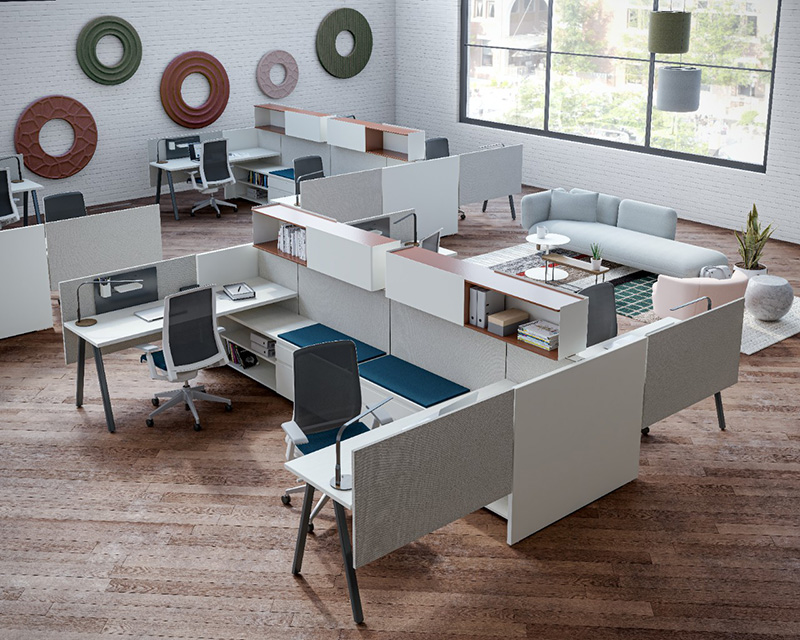
Here’s the important part regarding the office – each one of these cultures has space implications. The workstations for a Control culture are going to look very different than the ones for a Create culture. The control culture will tend to have higher panels, a structured floor plan and very traditional collaborative space. A Create culture will tend to have virtually no panels, an organically shaped floor plan and their collaborative space will have big comfy lounge chairs and the ability to brainstorm ideas – on a white board or maybe by electronic device sharing.
Now consider the differences between Apple and Blackberry: Blackberry was the 800-pound gorilla in the smartphone market. They were ubiquitous. Their business was built on getting ever more users on the Blackberry server. One intern described their office space as “like working at an accounting firm, but they are trying to do technology”. Apple looked at this market and envisioned a future where the smart phone for business and the MP3 and internet browser for entertainment were fused into one elegantly designed product. Compete culture vs Create culture. No need to tell you how that story ended.

Peter Drucker famously said, “Culture eats strategy for breakfast”. But which culture is the right one? The answer is, there is no right one. Any company can be successful when their culture matches what they do and why they do it. The trouble comes on a macro level when companies do things that do not fit their culture. Trouble also starts on a micro level when a company’s space is not aligned with its culture – when Control cultures are put in open plan with no divisions and given a slide to use between floors, like in the example above.
And that’s the point. Understanding your culture isn’t a space exercise or a furniture exercise – it’s a business exercise and a critical one at that. Because whether you choose to manage culture or not, it’s happening. Those who identify it and align their space and policies with their culture prosper. Those who do not, eventually, lose the fight.
Authors:
Michael Furnari LEED AP + WELL AP
Territory Sales Manager, Haworth
“ Michael is a student of business and a believer in the power of space to create engaged, innovative work groups. He has helped dozens of clients in Central Florida use space as a tool to achieve their business objectives”
Erin Schultz, CBRE
Director, Market Leader for Tampa & Orlando, CBRE
“Erin believes a strong management process can create great spaces for clients. Her multi-disciplinary experience and approach have helped some of the largest corporations in the country create effective and cost-efficient facilities”