Can you do your best work if you are always cold or always hot? How about if you cannot tell what the weather is like outside from your workspace? Do you feel a connection to your fellow employees? A sense of belonging? Does your space help you remember things you need to do? Shouldn’t your workspace provide all of that and more?
AFFORDANCE • (noun)
The characteristics of an object or space that encourage a particular behavior, or—put more simply—the opportunity for action.
Affordances is a psychological term that was coined in 1977 by psychologist Peter Gibson. Applied to the workspace, Affordances are the elements of the office environment that encourage workers to do their best work. Twenty years of research on this topic has shown that there are 10 Human Affordances that must be considered to inspire that best work.

In previous articles, we explored the concepts of Organizational Culture, Collaboration, and Workstyles. Affordances are the final piece in that puzzle – where the rubber meets the road design-wise. This is where individual components of the space and workstation are taken into consideration. At the same time, those previous discussions on Culture and Workstyles will help you decide on which Affordances are most important for your own company to emphasize.
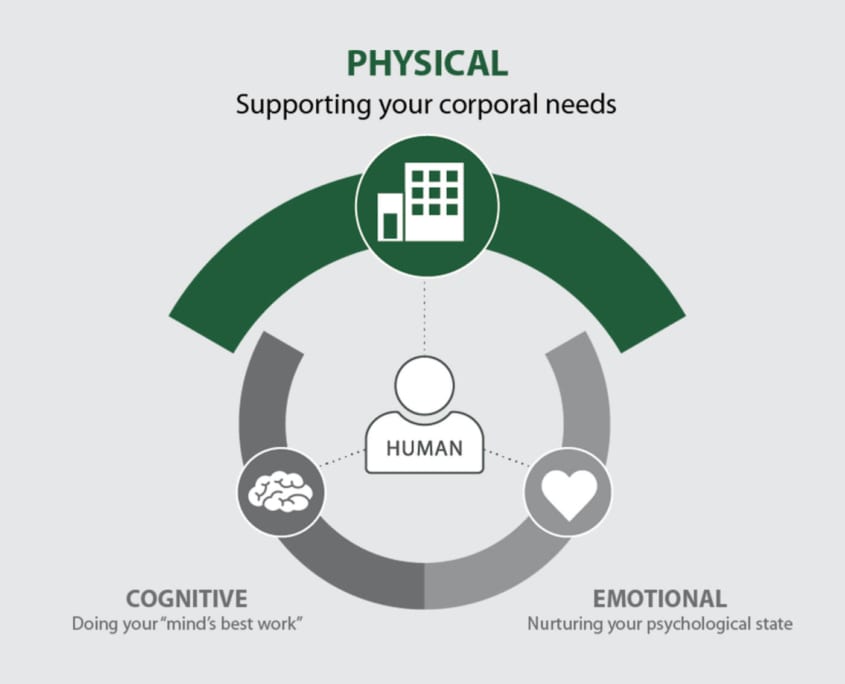
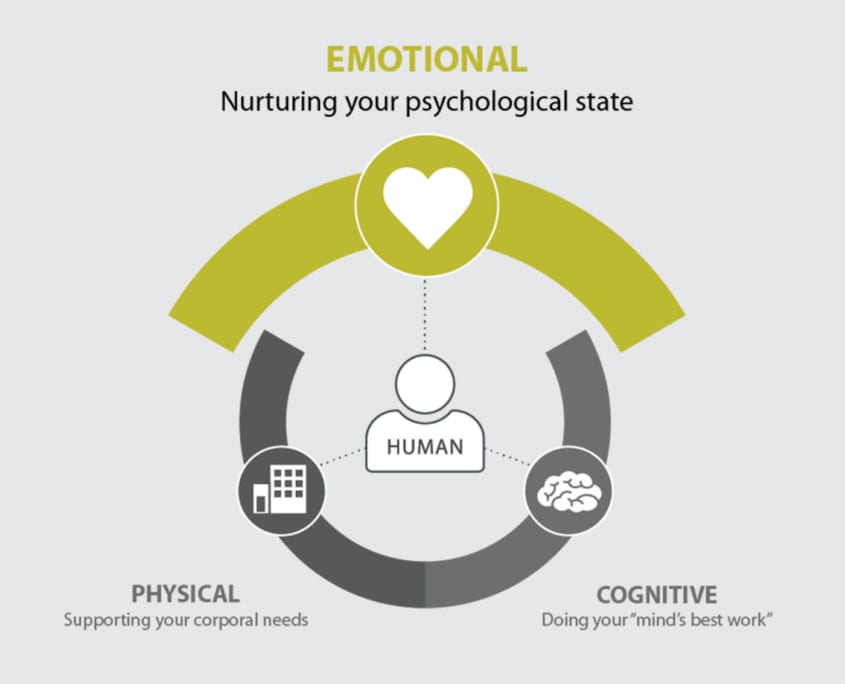
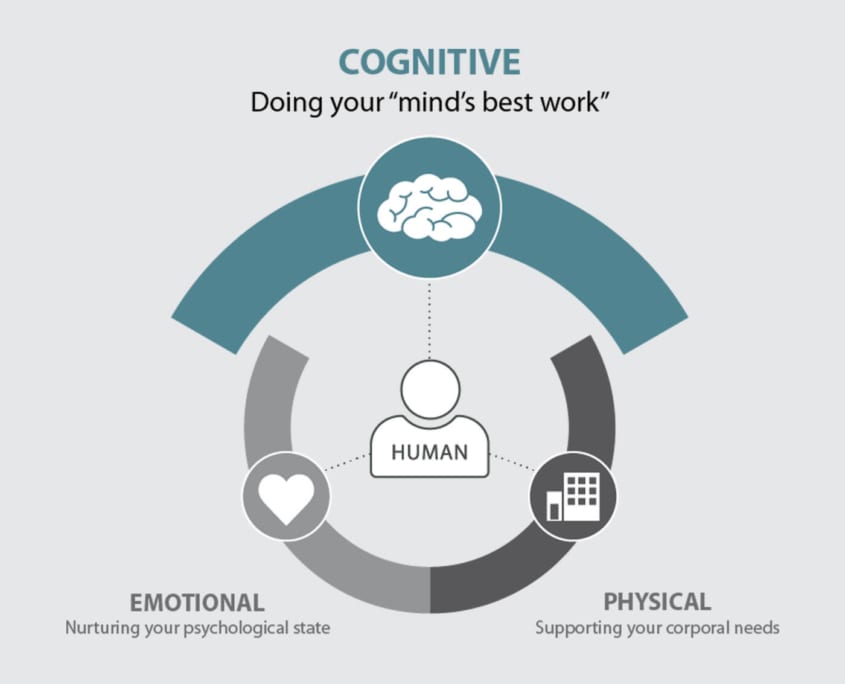
The 3 broad categories of Affordances are:
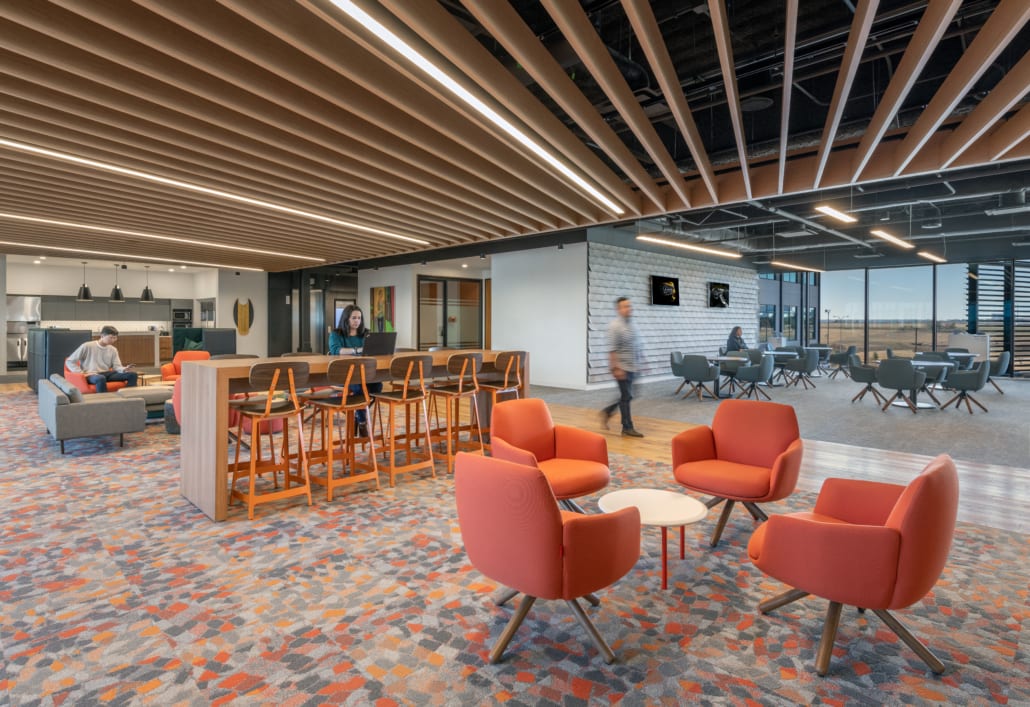
- Physical: The physical Affordances include not just the anthropometric needs of a desk and a chair but also things like acoustics, proper lighting, and thermal comfort. In a broader sense the physical space must also allow for movement. Activity-based work areas (focus vs collaborative) as well as interaction – shared “bullpen” style work areas – may be critical Affordances, depending on your culture and workstyles.
- Emotional: Employee engagement in the US is at all-time lows. It’s estimated that only 30% of US workers are engaged. Why should we care? Because engagement is an indicator of productivity and, ultimately, innovation. Emotional Affordances consider this aspect of space and how it can promote engagement. Emotional Affordances like Belonging: connections employees feel between each other, encouraging interaction between employees, and a sense of trust in other employees and the organization are inter-related to employee engagement. The space itself can contribute some of these Affordances by being legible and inspirational. This means, where do I go to do individual focus work vs group creative work and incorporating artwork and biophilia into the space which helps our creative minds find inspiration. All these things can be accomplished while still being grounded in the core identity and culture of the organization. As an extreme example, research shows that creating a sense of belonging can be increased by simply adding a lounge-type seat at the end of a run of workstations for a casual conversation.
- Cognitive: These Affordances refer to elements that encourage the mind’s best work. Not surprisingly, they include things like insulation, stimulus control and the ability to do focus work. The space also needs to provide the tools to externalize ideas for validation and verification by peers, such as marker boards, device sharing technology, etc. The affordances of recall and reminding – remembering important stuff from the past and stuff we need to do in the future – are Affordances that are currently under attack by the free-address concept. As an example, one of the most common devices for reminding in the office is post it notes. If you have no permanent desk, where do you stick that note that says “remember to print for meeting”?
When taken as a whole, the concept of Affordances seems very common sense. And in practice, some of them are addressed intuitively, like providing a desk and proper lighting and separation for focus work. But, also in practice, many of them are missed in the typical office. For instance, how many times have you seen an office that ignores the emotional Affordances of inspiration or recovery – a dedicated space for workers to recharge before the next task? How many times have you spoken to someone who complains about the noise in their office because the concepts of focus, stimulus control, and acoustics have been ignored? Conversely, how many times have you seen a space that resembles Dilbert-ville with no accommodations for interaction besides the break room? And being truthful, how many times have you met with a company who has even considered their Organizational Culture in a meaningful way? These are examples of the common sense of Affordances running headlong into the reality of “the way we’ve always built offices”.
As stated earlier, not all Affordances are necessarily appropriate for every company because of cultural and workstyle differences. Building a space for interaction and movement might be disastrous for a group of engineers, just like building a space for focus and insulation would be equally detrimental for the marketing department of a start-up tech company. Using the Affordances framework in the context of Organizational Culture and individual department Workstyles will ensure you are focusing on the Affordances that will maximize productivity and engagement for the organization.
The straight line from Culture through Workstyles to Affordances cannot be ignored by any company who seeks to compete in the 21st century. Globalization has not only brought increased competition from the 4 corners of the world but has accelerated both success and failure. Consider that the average lifespan of a company in the S&P 500 in 1960 was 60 years old. Now it is less than 20 years. Business is moving and changing more rapidly than ever. In the face of this change, a company’s understanding of their Culture and brand and how it is reflected in their space, as well as represented by its workforce, are the keys to long term success in this rapid paced business environment.
Authors:
Michael Furnari LEED AP + WELL AP
Territory Sales Manager, Haworth
“ Michael is a student of business and a believer in the power of space to create engaged, innovative work groups. He has helped dozens of clients in Central Florida use space as a tool to achieve their business objectives”
Erin Schultz, CBRE
Director, Market Leader for Tampa & Orlando, CBRE
“Erin believes a strong management process can create great spaces for clients. Her multi-disciplinary experience and approach have helped some of the largest corporations in the country create effective and cost-efficient facilities”