
• Link to Facebook
  • Link to LinkedIn
  • Link to Instagram
  • Link to X
  • Link to Pinterest
  • Link to Youtube
  • Link to Flickr
  • Link to Mail
  • Modern Workplace Series
Inspiring Workspaces by BOS
  • About
    • Company
      • Company and Culture
      • Team
      • Work at BOS
      • Sustainability
    • Inspiration Centers
      • Roselle, IL – HQ
      • Chicago, IL
      • Orlando, FL
      • Tampa, FL
    • Sales Offices
      • Tallahassee
      • Naples & Southwest Florida
    • Partners
      • BOS & Haworth
      • Vendors
      • Philanthropy
  • Projects
  • Services
    • Overview
      • proACT – The BOS Process
      • 360° Experience
      • Operational Excellence
    • Services
      • Furnishings
      • Workspace Consultation
      • Design Services
      • Installation Services
      • Decommissioning & Trade In
      • Warehousing
      • Technology Integration
      • Culture Promotion & Digital Solutions
      • Corporate Signage & Branding
  • Products
      • Workspaces
      • Seating
      • Desks
      • Tables
      • Storage
      • Architectural Products
      • Phone Booths
      • Technology
      • Collaborative
      • Accessories
      • Resimercial & Fun
      • Ergonomic & Wellness
  • Inspiration
    • Be Inspired Blog
    • Work Inspired Podcast
    • Workplace Insights
    • Videos
    • Lookbook
    • Idea Starters
    • Gallery
  • Markets
    • Corporate
    • Learning
    • Healthcare
    • Government
    • Hospitality
    • Professional Services
    • Automotive
  • Connect
  • Click to open the search input field Click to open the search input field Search
  • Menu Menu

The Science of Color

English scientist, Sir Isaac Newton, played a vital role in how we understand color today. In the late 1660s, Newton discovered that when pure white light passes through a prism, it separates into all colors visible to the human eye: red, orange, yellow, green, blue, and violet. These primary colors are the source of all other colors. Each of them is made up of a single wavelength and cannot be separated further. When mixed together, they can create other colors. For example, different shades of green can be created by mixing blue with yellow. Softer shades of color are created by adding white, while darker shades are created by adding black.
science of color

How does color affect emotion?

Color psychology is the study of color as factor in human behavior. The human connection to color stems from the innate need to survive. Red fire, though warm and comforting, can also be dangerous. Brightly colored snakes, though small, can be highly poisonous and deadly. Color acts an immediate signal for danger and reward. That is why it is often cleverly used in advertisement and design to provoke intentional emotion and behavior

Culture also plays a role in how we respond to color. Because how we react to color is a somewhat learned experience, passed down through our ancestors. So, people from around the world will be affected differently by color.

Picking Your Workspace Color

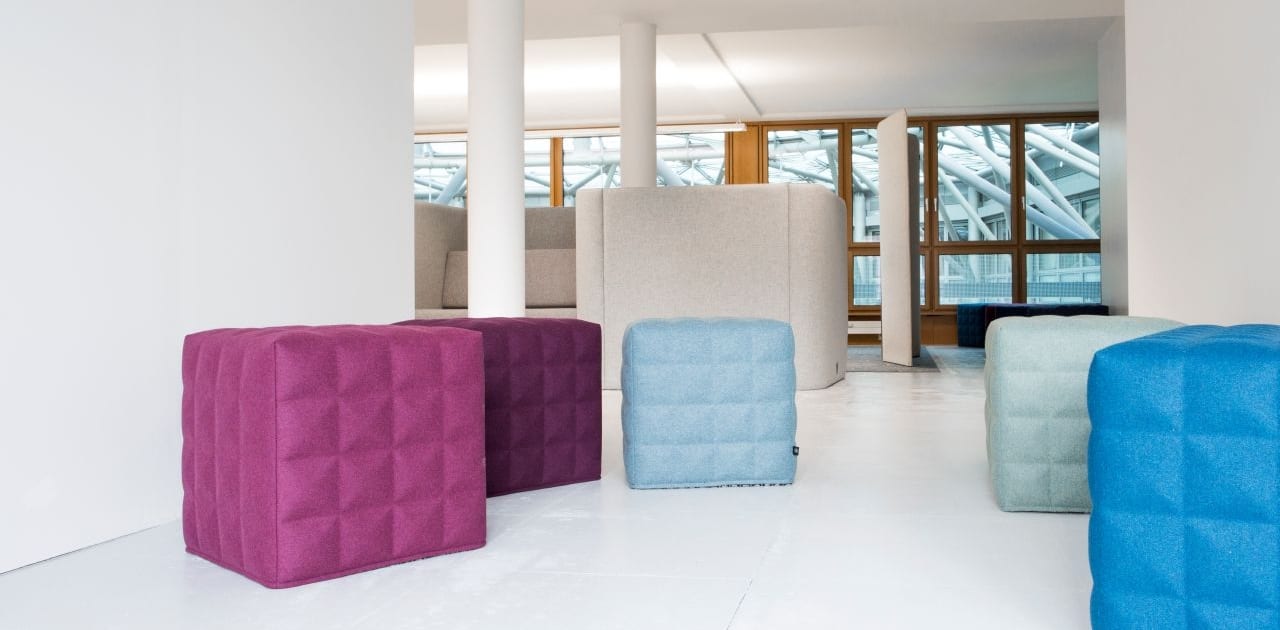
Color can impact a worker’s emotion and behavior. So, it is important to choose a work area’s color carefully. Red can be threatening, especially when used in large quantities. It can increase one’s heart rate and get one’s blood pumping faster. But when used sparingly, red can add that pop of color needed to boost a worker’s spirit and increase their productivity.

Green, a color of nature, is a more calming color. It represents vitality and optimism. A green room, in the entertainment industry, is a space where guests can relax and reenergize themselves before appearing on-screen. As a contemporary color, green could be the perfect accent or background shade a workspace needs for workers to feel at ease throughout the day.

Blue is soothing. As another color of nature, blue is reminiscent of tranquil waters and clear skies. It can lower one’s body temperature and slow their pulse, helping to relieve stress. It is a color traditionally used in the workplace because it balances serenity with productivity. But people in the food industry should reconsider decorating their workspaces with blue. Because there are not many naturally blue foods. Blue foods often a signal spoilage or poison.

When choosing the right colors for your workspace remember that some colors are complementary to each other: black/white, yellow/purple, green/red, and blue/orange. Light colors will brighten up a room by reflecting natural light, while dark colors can make a room feel smaller by absorbing light.


Connect with the industry’s most experienced team to learn more about choosing the right color for your workspace!

Connect

Search

Search Search

Workplace Trends

  • Golf Event 2025
    Charity Golf Event 2025September 30, 2025 - 1:28 pm
  • NeoCon 2025June 16, 2025 - 10:29 am
  • NeoCon 2024June 14, 2024 - 11:01 am
  • neocon 2023
    NeoCon 2023June 13, 2023 - 1:52 pm
  • innovatoin in design
    Haworth’s Innovation in Design and Construction for Healthcare EnvironmentsFebruary 10, 2023 - 11:12 am
  • industry influencers cre
    Industry Influencers – CREJanuary 20, 2023 - 12:00 pm

Work Inspired Podcast

  • aspire thumbnail
    From Support to Success: Creating Opportunities That LastDecember 17, 2025 - 2:46 pm
  • Small Teams, Big Power: How AI Levels the Playing FieldOctober 14, 2025 - 11:31 am
  • AL Fiesel thumbnail
    We Over Me: Designing Workplaces That Put People FirstSeptember 9, 2025 - 1:09 pm
  • Workplaces Worth Coming To: Culture, Wellness, and EmpathyJuly 8, 2025 - 11:03 am
  • Kyle Yardley
    Designing for Dignity: Rethinking Rural Jail DesignJuly 1, 2025 - 12:15 pm
  • Patrick Russo, BOS Podcast
    Build to Thrive: Empowerment, Grit, and Vision in DevelopmentFebruary 10, 2025 - 4:45 pm

Thought Leadership

  • office people
    Designing the Workplace Through the 5 SensesApril 22, 2026 - 12:14 pm
  • AI’s View of the Modern Workplace – 2026December 29, 2025 - 10:40 am
  • 5 Cultural Shifts Workplaces Must EmbraceNovember 12, 2025 - 3:01 pm
  • Is the Return-to-Office Debate Still Relevant?November 12, 2025 - 12:43 pm
  • Workers
    What AI Can’t Replace in the Future of Workplace DesignOctober 15, 2025 - 3:05 pm
  • Team
    50 Ways to Make the Workplace Empowering and Inclusive for EveryoneJuly 10, 2025 - 4:12 pm

Follow us on Facebook

BOS Footer

BOS Footer

Be Inspired.

  • GFT
  • Designing the Workplace Through the 5 Senses
  • GE Healthcare – MR Building, Ultrasound
  • Professional Banking
  • IREM

BOS Inspiration Centers

  • Roselle Headquarters
    501 South Gary Avenue
    Roselle, IL 60172
    877.267.0267

  • BOS Chicago
    325 N Wells St STE 110,
    Chicago, IL 60654
    312.670.8530

  • BOS Orlando
    200 Technology Park
    Lake Mary, FL 32746
    407.805.9911

  • BOS Tampa
    1600 East Eighth Ave, Ste C-201
    Tampa, FL 33605
    813.549.7310

Connect with Us

Email: info@bos.com
Phone: 877.267.0267

Contact Form

Places to Visit

    • Shop Haworth Online
    • BOS Healthcare
    • BOS Holdings
    • Haworth Website
    • AIS Website
© Copyright BOS Holdings, Inc. | Privacy Policy - powered by Enfold WordPress Theme
  • Link to Facebook
  • Link to LinkedIn
  • Link to Instagram
  • Link to X
  • Link to Pinterest
  • Link to Youtube
  • Link to Flickr
  • Link to Mail
Link to: Technology and the Zero Hour Work Week – Peter Jackson, CEO at Bluescape Link to: Technology and the Zero Hour Work Week – Peter Jackson, CEO at Bluescape Technology and the Zero Hour Work Week – Peter Jackson, CEO at Bluesc...Peter Jackson Interview Link to: Top 20 Quotes on Never Giving Up Link to: Top 20 Quotes on Never Giving Up never give upTop 20 Quotes on Never Giving Up
Scroll to top Scroll to top Scroll to top
X