
We are surrounded by color. Color can impact our behavior, emotions, and even our workplace performance. Though our brains will likely categorize color automatically, we are partially taught how to respond to color through human experience, advertising, and tradition. That is why people react to colors differently across the globe. Our reactions to colors can be better understood through color psychology.
The Psychology of Blue
Each shade of blue can have a different meaning. But universally, blue is a favored color. Like a clear sky and a calm ocean, blue is serene. The color can help you relax and achieve mental clarity. With this clarity, you can feel more energized and be more productive.
Blue is traditional and dependable. It evokes a is non-threatening confidence. But some shades of blue can feel cold or distant, reminding viewers of ice and the desolate Arctic. While other shades of blue can stir up feelings of sadness. For example, consider Picasso’s “blue period.” During a time when he was deeply depressed, Picasso painted only in monochromatic shades of blue. The color blue’s relation to sadness can be further understood through common phrases like “feeling blue” or “morning blues.”
Blue in the Workplace
Blue and red both give energy. But the two colors affect people in very different ways. While red can increase your heart rate and get your blood pumping, blue can lower your body temperature and slow your pulse. Blue is more often chosen for the workplace, because it balances productivity with serenity.
Many companies use the color blue in their brand and logo designs: Facebook, Twitter, Bank of America, The Weather Channel, JetBlue, etc. They likely chose this color, because blue can symbolize trust, intelligence, and innovation.
But if your business is involved in the food industry, you may want to think twice about including a lot of blue in your workplace color scheme. Since there aren’t many naturally occurring blue foods, other than blueberries and blue corn, the color blue can appear unappetizing. As humans, we do our best to stay away from poisonous or spoiled foods, which are oftentimes blue. Some say that the color blue can even slow down the human metabolism.
How to Incorporate Blue
All colors reflect natural light. But certain colors, like soft blues, reflect more light. Walls painted with soft shades of blue can make tight spaces feel bigger. And by choosing light-reflecting paint, you have the opportunity to save energy and cut electricity costs.
Like white or beige, softer shades of blue can also be subtle backdrops for other colors. White is a common combination with blue. It is traditional and clean, like clouds in the sky. Green and brown also pair well with blue, because they can be found together in nature and will give your workspace an earthy feel.
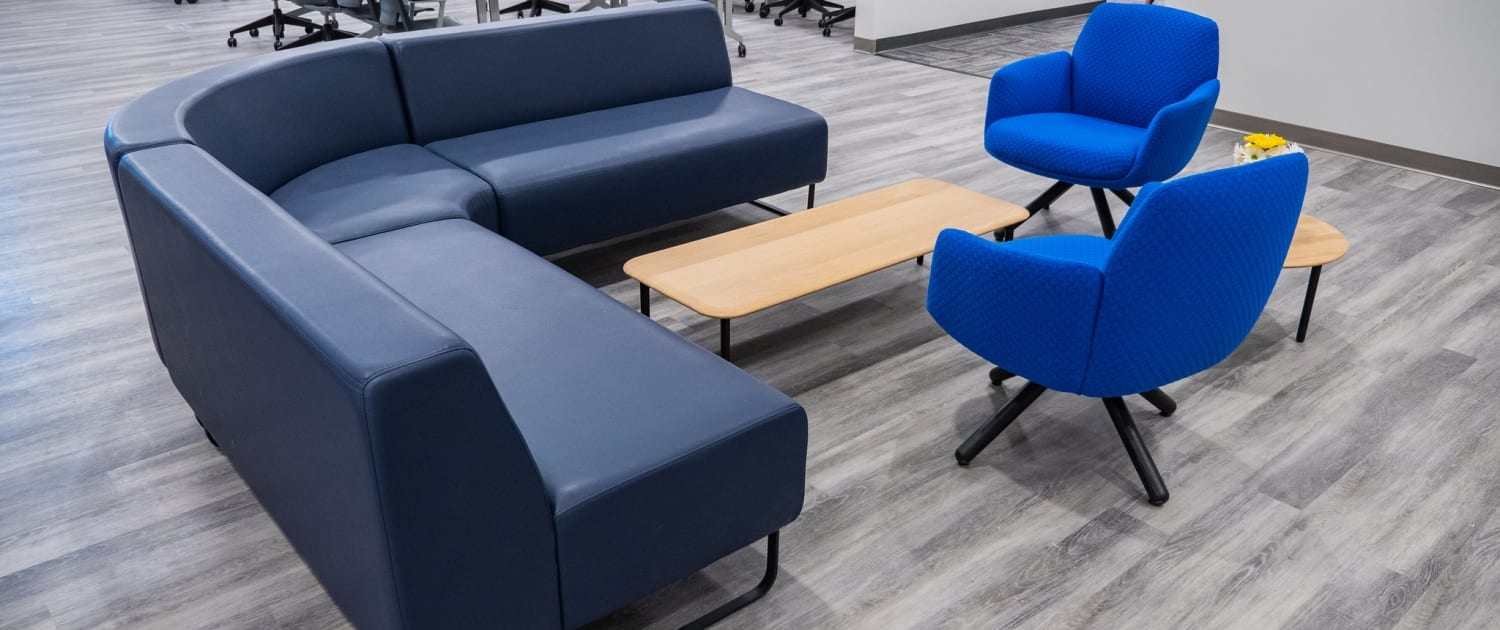
Deep shades of blue can act as statement pieces to draw the eye in. To incorporate blue in your workplace design, you can include blue upholstery, pillows, or pieces of art.



