
We are surrounded by color. But depending on where you live in the world, you may respond differently to the shades you see. Color psychology studies one’s subjective response to color. Varying hues are proven to impact one’s behavior, emotions, and even workplace performance. This impact derives from learned responses passed down and acquired by human experience, advertisement, and tradition.
The Psychology of Green
Found most commonly in nature, green is an earth tone. It symbolizes growth and rebirth. Therefore, it’s not surprising that the universal recycling symbol is green. Green, or going green, in its expression, encompasses environmental issues, ecological problems, and the hope to solve them.
The color of four-leaf clovers, green is also considered to be a lucky. Some people may credit the Irish for making green what it is today. It is reminiscent of St. Patrick’s Day celebrations, the month of March, and the buds of Spring. But green, as the color of money, can not only symbolize fortune, but it can also symbolize envy. When someone is said to be green, this usually means they are jealous, immature, or greedy.
Green in the Workplace
Green creates a calming effect. In the entertainment industry, a green room is a space where guests can relax before appearing on-screen. Though oftentimes, the room isn’t actually green, its name derives from the color’s stress-free appeal. And given its circle of life connection, green is a color of optimism. When something is green in nature it oftentimes is alive and thriving. Therefore, green in the workplace can represent vitality for the company and its future. Also, green means go, as all drivers know. So, the color can symbolize forward-thinking and encourage energized momentum in innovation.
Some brands that include green in their logos are Whole Foods Market, John Deere, Starbucks, and Android. The color green also has a place in property, military, banking, and finance. It is a generally favored color across markets.
How to Incorporate Green
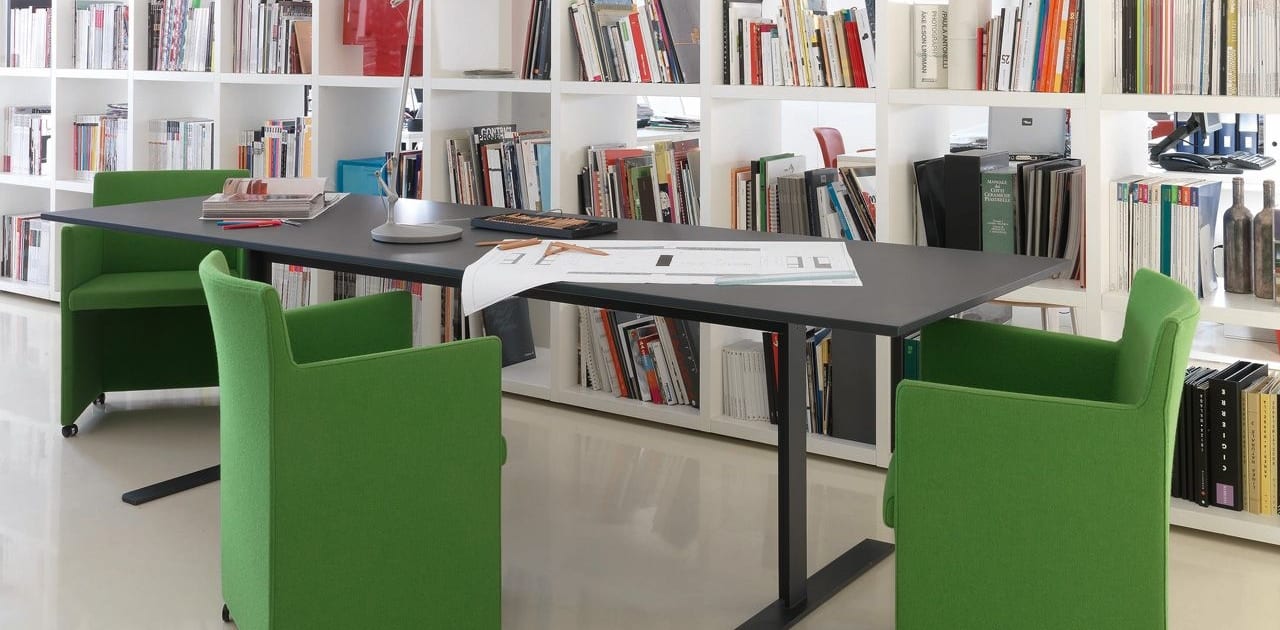
The color green goes best with other earth tones such as brown, yellow, and blue. Earth tones are considered contemporary, neutral, and therefore, welcoming. Sage and olive shades are considered to be the most neutral of the greens and are often used in decorating for their grey and brown undertones. But don’t be afraid to have a little fun with brighter shades of green like lime, parakeet, mint, and seafoam. These can bring a unique quality to your workspace that is striking and fresh. Green is a color that can be used as an accent or a background color, depending on its shade and placement.
Plants are a great, eco-friendly way to incorporate green in your workspace. Biophilic design brings nature into the workplace. It can enrich the space you work in by cleaning the indoor air and producing oxygen. Whether they’re potted, hanging, or a part of a living wall, plants may be all the green you need in your workspace.



