
Throughout history the workplace has adapted to fit the needs of the modern worker. And with the COVID-19 pandemic, the workplace will change again. Workers now expect their workplaces to uphold higher health and safety standards. And not only are new policies needed to ensure these changes, but also thoughtful workplace design must be implemented to ensure worker protection and satisfaction.
To understand how workspaces may change, one can take a look back at the history of workplace design. Office trends hibernate and reemerge over time. And each time a trend returns, it returns adjusted to better serve the modern worker and societal needs.
The Old is New Again
While the popularity for open office plans sparked in recent years, the concept actually dates back to early 20th century. Architect Frank Lloyd Wright introduced the open office plan through his design of the Larkin Administration Building in Buffalo, New York in 1906.
Soon after, the open office plan became an opportunity to increase efficiency. It was no longer about what was best for the worker, but rather, what was best for increased production. Steel frames and elevators allowed companies to build upwards for the first time. Workers were assigned to work in confined spaces, away from natural light and far from even a view of the street below.
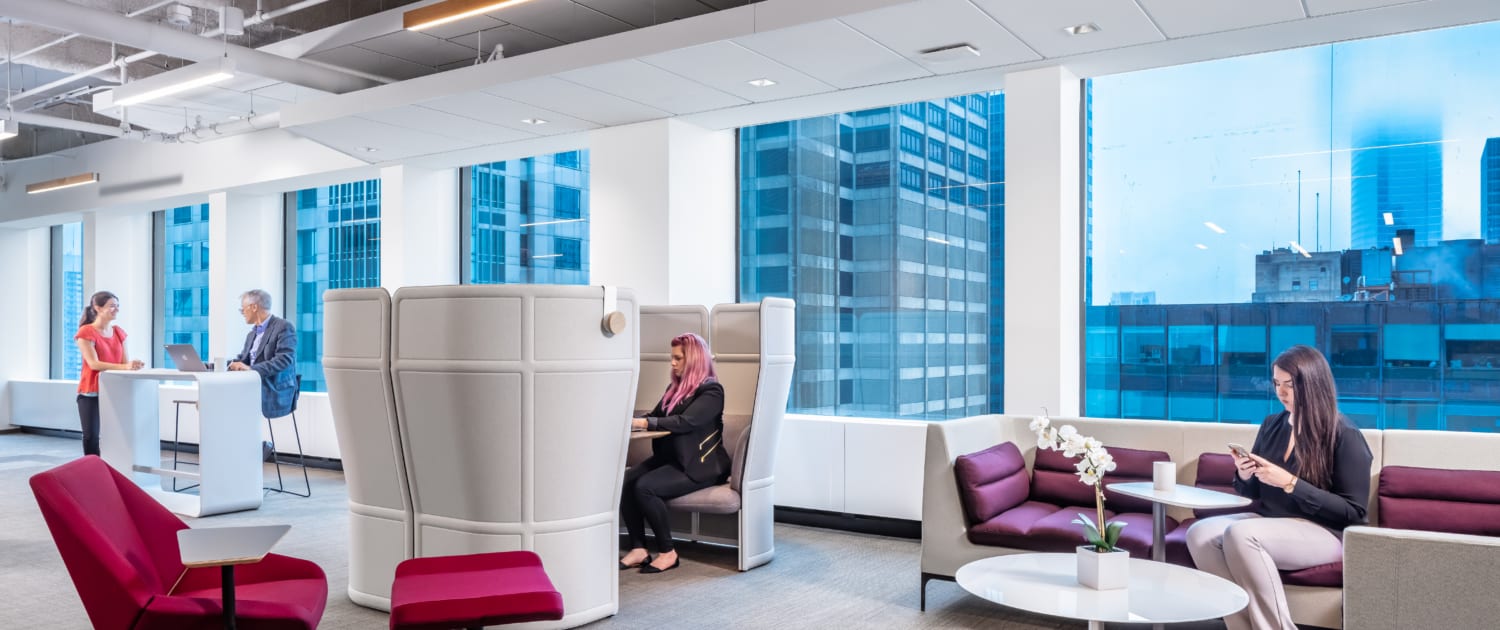
Germany’s Bürloandschat, or office landscaping, relaxed the strict systematic design of early open office plans. Like we’ve seen in today’s workplace design, workspaces in the 1960’s were divided casually by furniture and plants to create a healthier environment for workers.
Cubicles were designed around the same time as Bürloandschat. But they didn’t become popular until two decades later in the 1980s. The trend eventually gained traction because workers needed privacy, which they struggled to find in open offices. The cubicle was an affordable solution to a privacy problem that would continue to affect workers into modern times.
Eventually, workers became frustrated with cubicles. Because they too had their distractions and pitfalls. To ease workers’ frustrations, some workplaces returned to the open office plan, while others started to allow their workers to work remotely. Modern technology has finally made remote work a viable option. But in 2020, workers had no other option but to work from their own homes. Most workspaces were not designed to protect workers from infectious disease outbreaks.
So, who invented the office anyways?
Ancient Romans can be credited with the rise of the office. The word office actually comes from the Latin word officium. When the Roman Empire collapsed, many workers were left to fend for themselves and work from their homes.
This may sound vaguely similar to what is happening today. When COVID-19 struck the nation, we retreated to our homes to reassess the office landscape and start again. While our nation did not collapse like the Roman Empire, people’s day-to-day lives definitely changed. And the workplace would continue to be redesigned for centuries to come.



