
It is easy to trace the origin of some of today’s workplace furniture, like the lamp. Invented by Thomas Edison, the lamp and electricity are popular pieces of history. But who was the first person to put wheels on their office chair? When did desks become ergonomic? And were wastebaskets always plastic?
These questions may seem trivial. But by understanding the history of workplace furniture, you can create a workspace inspired by the past and ready for the future.
The Office Chair
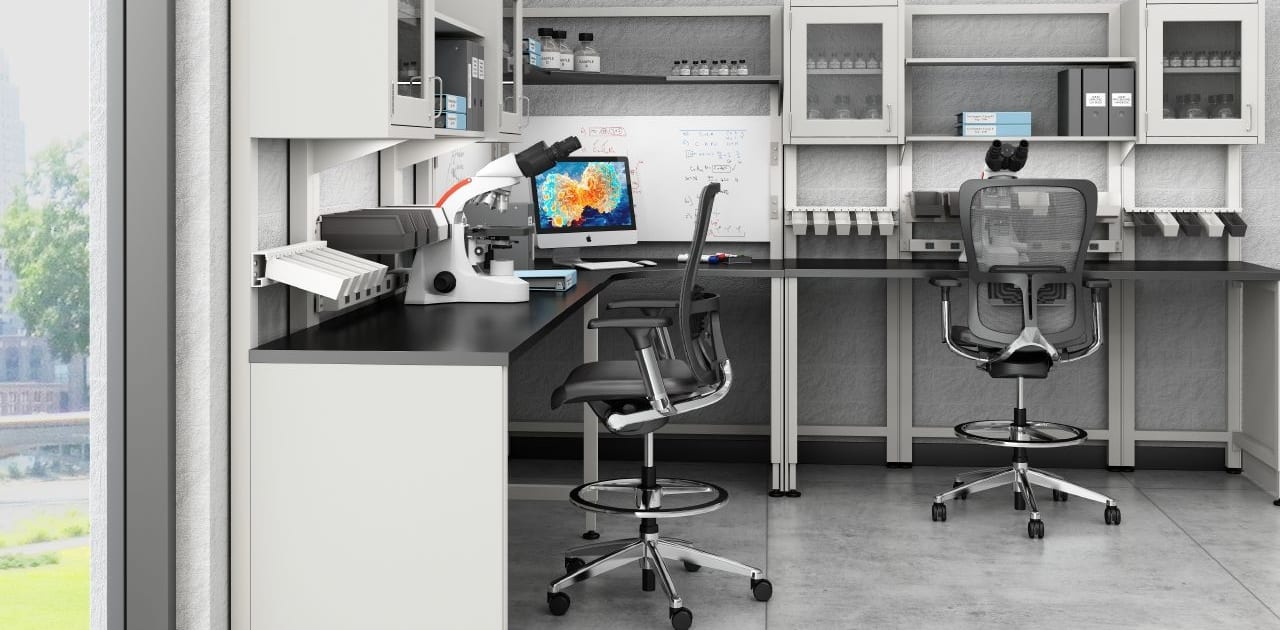
Most of today’s seating features, like recline, forward tilt, and height adjustment, were also known in ancient Egypt – the oldest known society with the tools capable of such construction. Dating back to about 1900 BC, Egyptian chairs were probably built to help artisans better perform their tasks. They were available not only to nobility, but also to commoners.
In the 1840s, Charles Darwin, best known for his theory of evolution, needed an easier way to reach his specimens while working in his study. He put his office chair on wheels, and the swivel chair was born. Popularity of the office chair grew worldwide when inventor Thomas Warren brought his design, the Centripetal Spring Armchair, to the 1851 Great Exhibition in London, England.
The Desk
Desks can be traced way back to Medieval times. Before the invention of the printing press in 1440, people copied books by hand. Oftentimes, they sat at desks fully equipped for the writing process. With hooks and slots, these desks were heavy and big.
The Renaissance then brought about changes in furniture design. With cabinetmaking being a popular trade at the time, desks began to include ornate carvings and decoration. They were no longer clunky worktables for book writers or craftsman. They were light, beautiful pieces featured in people’s businesses and homes.
Today’s workplace desks are most similar to the drafting tables of the 18th century. These desks were refined over the years to be ergonomic and meet the needs of modern workers.
The Wastebasket
Today’s workspace would look a lot different without wastebaskets. For a long time, it was acceptable to dispose of waste wherever convenient: people threw their trash into the streets, buried it in the ground, or dumped it in waterways. Some people even stored their garbage inside their homes.
People didn’t collect their garbage for official removal until 1875 in England. Ten years later, the US started collecting garbage in bins for removal. These bins were made of metal, wood, or anything people could find around their homes. This lack of uniformity in disposal collection is why it is hard to credit anyone solely for the invention of the wastebasket.
Some give credit to Peter Durand. In the 1810 he received the first patent for preserving food in a tin can. These tin cans were often reused to store garbage. Or maybe, credit is due to industrial designer Charles Harrison – who created the plastic wastebasket in the late 20th century.
Recycling didn’t become a mainstream concept until 1968, about three years after the U.S. Government enacted the Solid Waste Disposal Act. But people today still bury their trash in the ground and dump it in the ocean. As the ratio of trash per person increases overtime, people are focusing less on how to dispose of waste and figuring out how to reduce waste.



